
Bkwcoffee emphasizes coffee roasted after ordering; to choose cold brew coffee beans in 2026, match the stated flavor notes to how you drink your coffee, then check the roast and grind. Start with chocolate or toffee notes if those are flavors you enjoy, and remember that water, steeping, ice, and milk also change the finished cup.
- Choose cold brew coffee beans by flavor notes first; roast level alone does not describe the finished cup.
- Bkwcoffee Cold Brew Coffee includes a medium-roast option described with chocolate, toffee, and floral tones.
- Cold brew blends offer a clear starting point, but other coffee beans can work with cold extraction.
- Compare beans using the same grind, water, steeping method, and serving style before changing your recipe.
Why this matters
A bag labeled for cold brew tells you its intended use, not everything about its flavor. For your 2026 shopping decision, a specific description such as chocolate, toffee, and floral tones gives you more direction than the words cold brew alone.
Choose the flavor you want to drink, not simply the darkest roast. Your brewing method still matters: a coffee served black over ice will taste different from the same batch mixed with milk.
How do you choose cold brew coffee beans for your favorite flavor?
Choose beans in this order: flavor description, serving style, roast, then grind. The two Cold Brew Coffee listings below illustrate why reading the description matters more than relying on a shared product name.
| Coffee option | What the description confirms | Best for | Limitation |
|---|---|---|---|
| Cold Brew Coffee | Specifically blended for cold brew coffee | Shoppers prioritizing a blend intended for cold brewing | The supplied description does not identify a roast level or specific tasting notes |
| Cold Brew Coffee: chocolate, toffee, and floral tones | Medium roast; smooth chocolate, toffee, and floral tones; described for cold brew or nitro | Shoppers who want those stated flavors as a starting point | The flavor description does not establish how strong your finished brew will be |
Bkwcoffee Cold Brew Coffee is best for home drinkers seeking a blend specifically intended for cold brewing. For a more flavor-led choice, the medium-roast listing provides the clearer description.
Neither listing guarantees your preferred result without some recipe adjustment. Use the product description to choose the beans, then use a repeatable brew to decide whether those beans suit you.
Choose a flavor direction before choosing a roast
Start with the flavors you already enjoy in coffee. Chocolate and toffee descriptions are useful if you want those associations; floral descriptions point toward a different aromatic quality. These are tasting descriptions, not promises that the coffee contains chocolate, candy, or flowers.
Write down a short preference before shopping: chocolate-forward, lighter and aromatic, or noticeably roasty. That simple choice keeps you from buying a bag because its name sounds stronger or more specialized.
Decide how you will serve the coffee
Taste your coffee in the form you actually drink it. If you add milk every morning, a black-only tasting leaves out part of the decision. If you drink over ice, judge the coffee after adding ice rather than only tasting it straight from the brewing container.
Keep additions consistent while comparing beans. A different amount of milk or syrup can obscure the difference you are trying to evaluate.
Treat roast as a clue, not a complete flavor description
Roasting changes coffee's flavor, but roast terms do not replace tasting notes. A medium label alone does not tell you whether a particular coffee will remind you of chocolate, fruit, nuts, or something else.
For the medium-roast cold brew option, chocolate, toffee, and floral tones are the useful details. Do not transfer that description to the other listing just because both share the same name.
A blend specifically intended for cold brew
Best for: shoppers who want the brewing method to guide their first choice. The first Cold Brew Coffee listing explicitly states that it is blended for cold brew coffee. That makes its intended use clear without requiring you to interpret an origin name or an espresso label.
The advantage is a straightforward starting point. The limitation is less flavor detail: the supplied description does not establish its roast, origin, or particular tasting notes.
Choose this option when cold brew suitability is your first filter. If chocolate, fruit, or roast intensity is your deciding factor, look for an explicit description rather than filling in those details yourself.
A medium roast with chocolate, toffee, and floral tones
Best for: shoppers seeking the listed chocolate, toffee, and floral profile. The second Cold Brew Coffee listing provides both a medium roast designation and a flavor description. It also identifies cold brew and nitro as intended uses.
Its advantage is a clearer flavor reference for your first order. Its limitation is that tasting notes cannot predict your exact result: brew strength, filtration, and additions still affect what reaches your cup.
Nitro means coffee served with nitrogen for a different texture; it does not mean you need nitrogen equipment to make ordinary cold brew. Choose this coffee for its stated profile, not because you expect a home jar to reproduce a nitro serving.
The two options below share a name, so use their descriptions to distinguish them before choosing.


Why cold brew flavor varies
Your beans supply the starting flavors; your preparation determines how you experience them. Keep these factors separate when deciding whether to change the coffee or the recipe.
- Flavor profile: Use the bag's specific tasting notes rather than assuming every cold brew blend tastes alike.
- Roast level: Roast affects flavor, but a roast label alone does not establish sweetness, strength, or your preference.
- Grind size: Finer particles extract differently and are harder to separate with some filters; a coarse grind is a practical immersion starting point.
- Coffee-to-water ratio: More coffee relative to water makes a stronger recipe, but strength is not the same as a darker roast.
- Steeping conditions: Time and temperature affect extraction, which is the movement of soluble coffee compounds into water.
- Serving style: Water, melting ice, milk, and sweeteners change the balance of the drink you taste.
Change the beans only after checking the recipe. Otherwise, you risk rejecting a flavor you like because the first batch was too diluted or difficult to filter.
A repeatable cold brew comparison for 2026
You do not need a complicated tasting setup. Use one recipe, one filter method, and the same serving style so the coffee is the main difference between batches.
The following is a suggested home trial, not a manufacturer-specific recipe or a guaranteed optimum. Follow your brewer's instructions when they specify a different method.
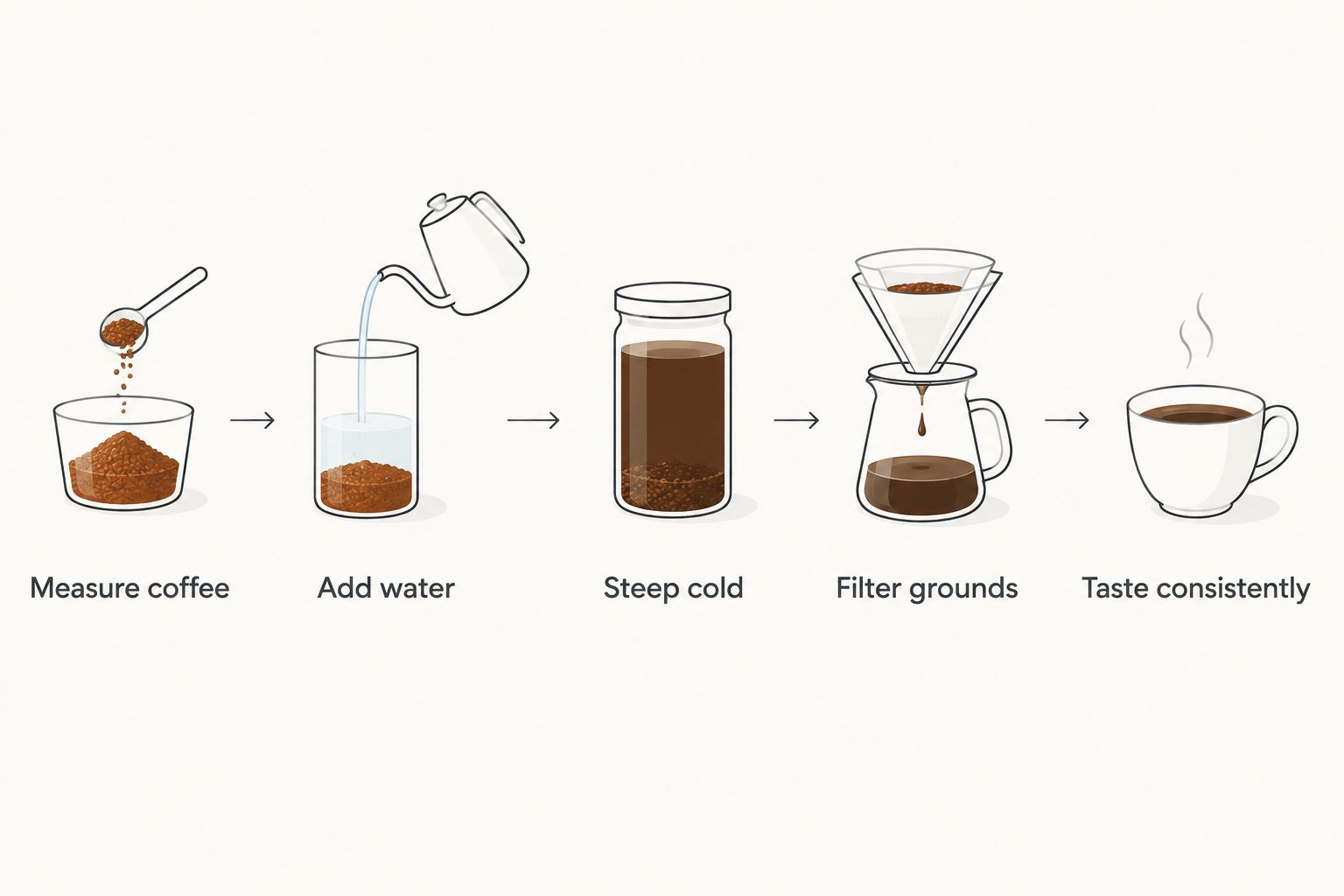
- Measure coffee. Start with 60 grams of coarsely ground coffee in a clean brewing container. Weighing makes your next batch easier to repeat than using an unmeasured scoop.
- Add water. Add 600 grams of drinking water. That is a 1:10 coffee-to-water ratio by weight, offered here as a starting recipe rather than a universal rule.
- Steep cold. Cover and refrigerate for an initial 12-hour trial. Keep the location and steeping time the same when comparing another coffee.
- Filter grounds. Separate the grounds using your brewer's filter or a suitable coffee filter. Avoid squeezing the grounds through the filter into the drink.
- Taste consistently. Taste a small amount plain, then prepare your normal serving with measured additions. Record what you liked before changing anything.
A scale is useful because it separates a bean comparison from a recipe comparison. If one batch uses a heaped scoop and another uses a level scoop, the result does not tell you only about the coffee.
Record the 60 grams of coffee, 600 grams of water, and 12-hour starting steep alongside your tasting notes. Those details give you a repeatable baseline; they do not prescribe the only correct way to brew.
Adjust one variable at a time
If the coffee tastes too strong, dilute a small serving before altering the whole batch. If it tastes thin, check the amount of water and ice before deciding the roast is wrong.
If the flavor is unpleasantly bitter or drying, review grind and steeping conditions. Make one change for the next trial, then compare again. Changing beans, grind, steeping time, and milk together makes the result difficult to interpret.
Do you need special beans for cold brew?
You do not need beans labeled cold brew to use a cold brewing method. Ordinary roasted coffee can be extracted with cold water; the label describes intended use rather than a separate kind of bean.
A dedicated blend offers a simpler shopping starting point, while another coffee gives you room to explore a familiar flavor through a different method. Neither approach removes the need to check grind and recipe.
Choose a dedicated blend when you want less guesswork about intended use. Choose another coffee when its stated flavors appeal to you and you are comfortable adjusting your preparation.
Is dark roast always better for cold brew?
Dark roast is not automatically better for cold brew. Choose it because you enjoy its roast character, not because cold water requires it.
A medium roast is a reasonable choice when its tasting notes match your preference. The medium-roast option described here supplies chocolate, toffee, and floral notes, so there is no reason to dismiss it simply for lacking a dark-roast label.
Keep roast and concentration separate. A concentrated medium-roast brew can taste strong, while a heavily diluted dark-roast brew can taste weak.
Should you buy whole beans or ground coffee?
Choose whole beans if you have a grinder and want control over grind size. That control is useful when you are adjusting extraction or trying to reduce particles passing through your filter.
Ground coffee removes a preparation step, but the grind must suit your brewer. Check the format and grind options on the current product page rather than assuming every listing offers the same choices.
For a practical 2026 buying decision, choose the format your equipment can handle consistently. Buying whole beans without a way to grind them does not improve your morning routine.
Keep a short flavor record
Use ordinary words: chocolatey, floral, too roasty, thin, or good with milk. You do not need specialist vocabulary to identify what you want to drink again.
For a Bkwcoffee cold brew comparison, record which listing you used as well as the shared product name. The medium-roast description and the general cold brew blend description identify different shopping information.
Keep the record short enough to use. Your goal is a repeatable cup you enjoy, not a notebook full of tasting terms you would never say aloud.
FAQ
What's the best way to choose cold brew coffee beans?
Choose cold brew coffee beans by the stated flavor notes, then check roast, grind, and how you plan to serve the drink. Compare beans with the same recipe so brewing changes do not hide their differences.
Which Bkwcoffee cold brew option has chocolate notes?
The medium-roast Cold Brew Coffee listing describes smooth chocolate, toffee, and floral tones. The other supplied cold brew listing does not specify those same notes.
Can I use regular coffee beans for cold brew?
Yes, regular roasted coffee beans can be used for cold brew. Choose flavors you enjoy and use a grind and filtering method suited to your brewer.
Does a darker roast make stronger cold brew?
A darker roast does not by itself determine cold brew strength. The coffee-to-water ratio and any dilution also affect how concentrated your drink tastes.
What grind should I start with for cold brew?
A coarse grind is a practical starting point for immersion cold brew. Follow your brewer's instructions because its filter and brewing method can require a different grind.
Are chocolate tasting notes the same as added chocolate?
Chocolate tasting notes are not the same as added chocolate. Tasting notes describe a flavor impression; check the ingredient information separately when ingredients matter to your choice.
Should I taste cold brew before adding milk?
Taste a little cold brew plain, then judge it with the milk you normally use. The plain sample helps you identify the coffee's flavor, while your usual serving tells you whether you enjoy the finished drink.
One last thing
For your next 2026 cold brew trial, save a small plain sample before adding anything. Compare that sample with your normal serving: if you like the coffee plain but dislike the finished drink, adjust the additions before buying different beans.
The most useful tasting note is the one that helps you repeat a cup you enjoy. Start with the stated flavor, keep the recipe steady, and let your everyday serving make the final decision.


