
Best overall: Cold Brew Coffee, the medium roast with chocolate, toffee and floral tones. Best for a brew-specific blend: Cold Brew Coffee, the version explicitly blended for cold brewing. Bkwcoffee leads with roasted-after-ordering coffee; this 2026 guide helps you choose cold brew coffee beans by flavor and make a repeatable batch at home.
- Bkwcoffee cold brew coffee beans suit home drinkers choosing between a stated medium-roast flavor profile and a brew-specific blend.
- Choose the medium roast for its listed chocolate, toffee and floral tones.
- Choose the dedicated blend when a coffee specifically blended for cold brewing is your priority.
- Start with a measured batch, then adjust dilution before changing your coffee.
Why this matters
Cold brew describes a brewing method, not a separate kind of coffee bean. You steep ground coffee in cool water, then separate the liquid from the grounds. Iced coffee, by comparison, can be brewed hot before cooling.
Your choice still starts with flavor. A coffee labeled for cold brewing gives you a clear intended use, while a stated roast and tasting profile give you more information about the cup you are choosing.
Bkwcoffee Cold Brew Coffee in the medium roast is the best starting point for home drinkers who want a stated chocolate-and-toffee flavor direction. That recommendation rests on the product description, not a claim that every drinker will prefer it.
What makes the best cold brew coffee beans?
For this 2026 shortlist, choose coffee using these criteria before looking at the ranking:
- Flavor direction: Look for tasting notes you actually enjoy. Chocolate and toffee point toward a different preference than a strongly fruit-led description.
- Roast information: A stated roast gives you another useful buying signal. It does not guarantee sweetness, caffeine content or a particular health effect.
- Brewing fit: A coffee explicitly described for cold brew removes uncertainty about its intended method.
- Usable format: Check whether you are selecting whole beans or ground coffee. Match the grind to your filter rather than assuming every package has the same options.
- Your usual serving: Decide whether you drink coffee black, over ice or with milk. Judge the finished drink that you actually make.
Roasted-after-ordering positioning helps explain how the brand approaches its coffee. It does not replace flavor information, and it is not a reason to assume an exact delivery date or freshness window.
Cold brew coffee beans at a glance
Both products below are named Cold Brew Coffee. The descriptions distinguish them; the parenthetical wording identifies the listing rather than introducing a separate product name.
| Coffee | Best for | Standout information | Key limitation |
|---|---|---|---|
| Cold Brew Coffee — medium roast | Choosing by stated flavor | Smooth chocolate, toffee and floral tones; described for cold brew or nitro | Floral tones are part of the stated profile, so this is not described as chocolate-only |
| Cold Brew Coffee — dedicated blend | Choosing by brewing purpose | Explicitly blended for cold brew coffee | The description gives less flavor and roast detail to guide your choice |
The medium roast takes the overall recommendation because its description answers more of a first-time shopper's questions. The dedicated blend earns a different slot: it makes the intended brewing method explicit, without offering the same flavor detail.
1. Cold Brew Coffee: best cold brew coffee beans for flavor-led buying
This medium-roast Cold Brew Coffee lists smooth chocolate, toffee and floral tones. Its description also identifies cold brew and nitro as uses; nitro means coffee served with nitrogen to change its texture.
Choose this version when you want a clearer flavor target before buying. Chocolate and toffee are the most useful starting cues, but keep the floral note in the picture rather than expecting an exclusively dark, roasted taste.
Cold Brew Coffee medium-roast pros
- The stated medium roast gives you a concrete point of comparison.
- Chocolate and toffee notes help you decide whether the flavor direction appeals.
- Floral tones add useful detail instead of leaving the profile undefined.
- The description explicitly connects the coffee with cold brew preparation.
Cold Brew Coffee medium-roast cons
- The floral component is not the obvious fit if you want only a heavily roasted flavor.
- Tasting notes do not tell you the exact strength of your finished batch; your recipe controls that.
- A mention of nitro does not mean ordinary steeping produces nitro coffee. That serving style needs additional equipment.
Best for: Home coffee drinkers who want a medium roast with a stated chocolate-and-toffee direction.
For your first batch, taste this coffee black before adding anything. Then prepare your usual serving with ice or milk. That comparison tells you whether the listed flavor direction works in your everyday drink, rather than only in an undiluted sample.
Verdict: Buy this version if you want the clearest flavor-led starting point.
2. Cold Brew Coffee: best cold brew coffee beans for a dedicated blend
This Cold Brew Coffee listing describes a blend specifically made for cold brewing. That is its strongest buying signal: the product's stated purpose matches the method you plan to use.
Choose this version when brewing fit matters more to you than choosing from a detailed tasting profile. Do not borrow the other listing's medium roast or chocolate-and-toffee notes; the descriptions belong to separate product pages.
Cold Brew Coffee dedicated-blend pros
- The description explicitly identifies cold brewing as its intended use.
- A brew-specific blend gives a first-time shopper a straightforward selection route.
- Its purpose matches a home steep-and-filter routine without requiring a nitro setup.
Cold Brew Coffee dedicated-blend cons
- The supplied description does not establish a roast level for this version.
- It gives less tasting detail for comparing chocolate, fruit, floral or roasted preferences.
- A cold-brew label does not determine the right strength or dilution for your cup.
Best for: Home brewers who prioritize a blend explicitly intended for cold brewing.
This is the simpler decision if your main question is whether the coffee is meant for your brewing method. If your main question is what it should taste like, the medium-roast version gives you more information before ordering.
Verdict: Buy this version for its stated brewing purpose; skip it if detailed flavor notes are essential to your choice.
Choose the version that matches your cup
For a first order in 2026, choose between these products on the information that separates them. Pick the medium roast for its listed flavor profile, or the dedicated blend for its explicit cold-brew purpose. Both cards retain the store's product names, so use the descriptions to distinguish them.


Make a small batch before changing coffees
A repeatable recipe helps you judge the beans instead of accidentally judging a different brewing method every time. Use this as a practical starting recipe, not a product-specific instruction or a promise of the ideal cup.
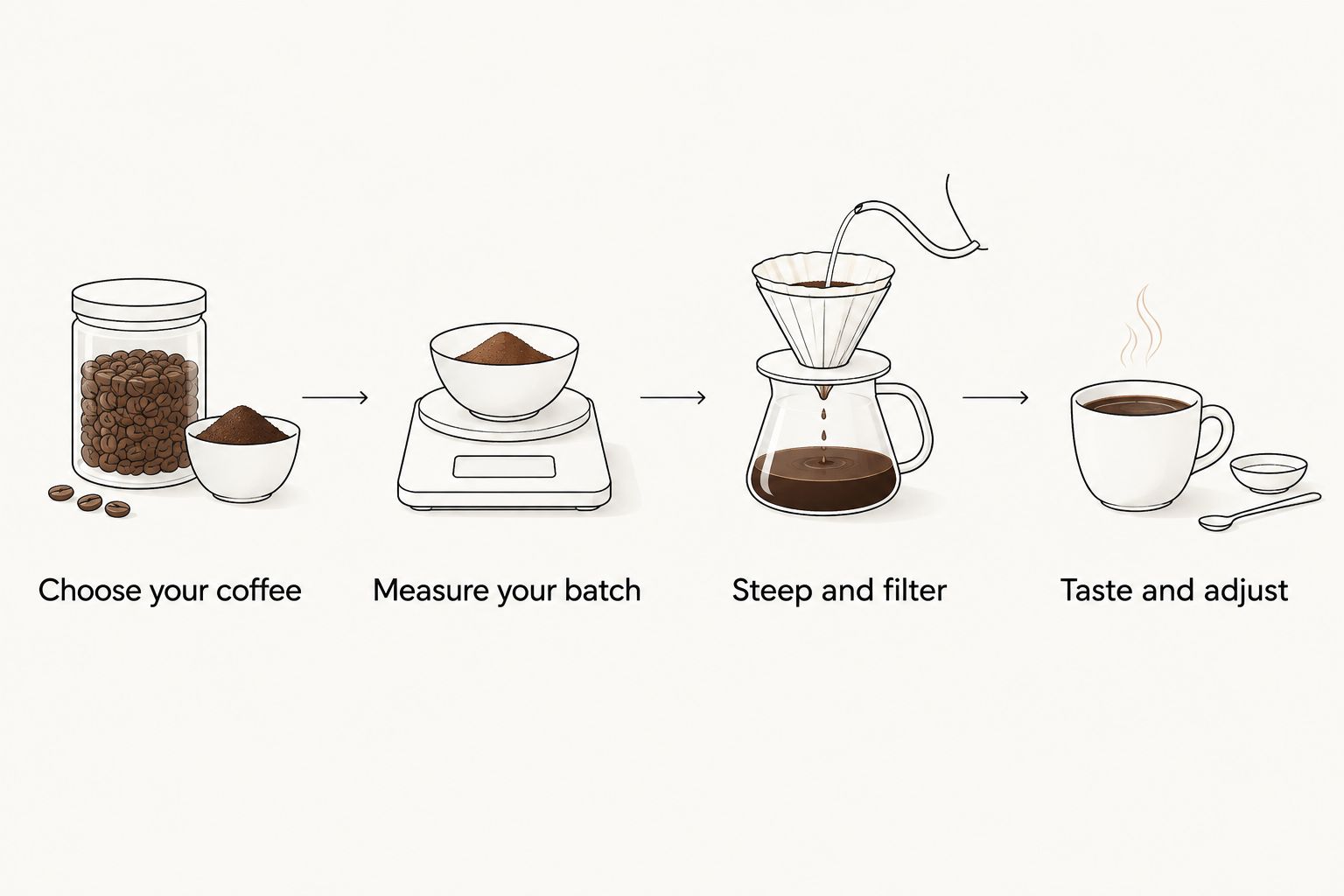
Choose your coffee
Select the version whose description matches your preference. Check the format before ordering: whole beans require a grinder, while ground coffee needs a grind suitable for your brewing setup.
A coarse grind has visibly larger particles than espresso grounds. It is a useful starting point for immersion brewing because very fine particles are harder to separate cleanly with many home filters.
Measure your batch
Start with 60 grams of coffee and 600 milliliters of water. This gives you a coffee-to-water ratio of 1:10 by weight when the water is weighed in grams.
Use a clean container with enough room to stir without spilling. Write down your measurements so the next batch is comparable; scoops vary with the coffee and grind.
Steep and filter
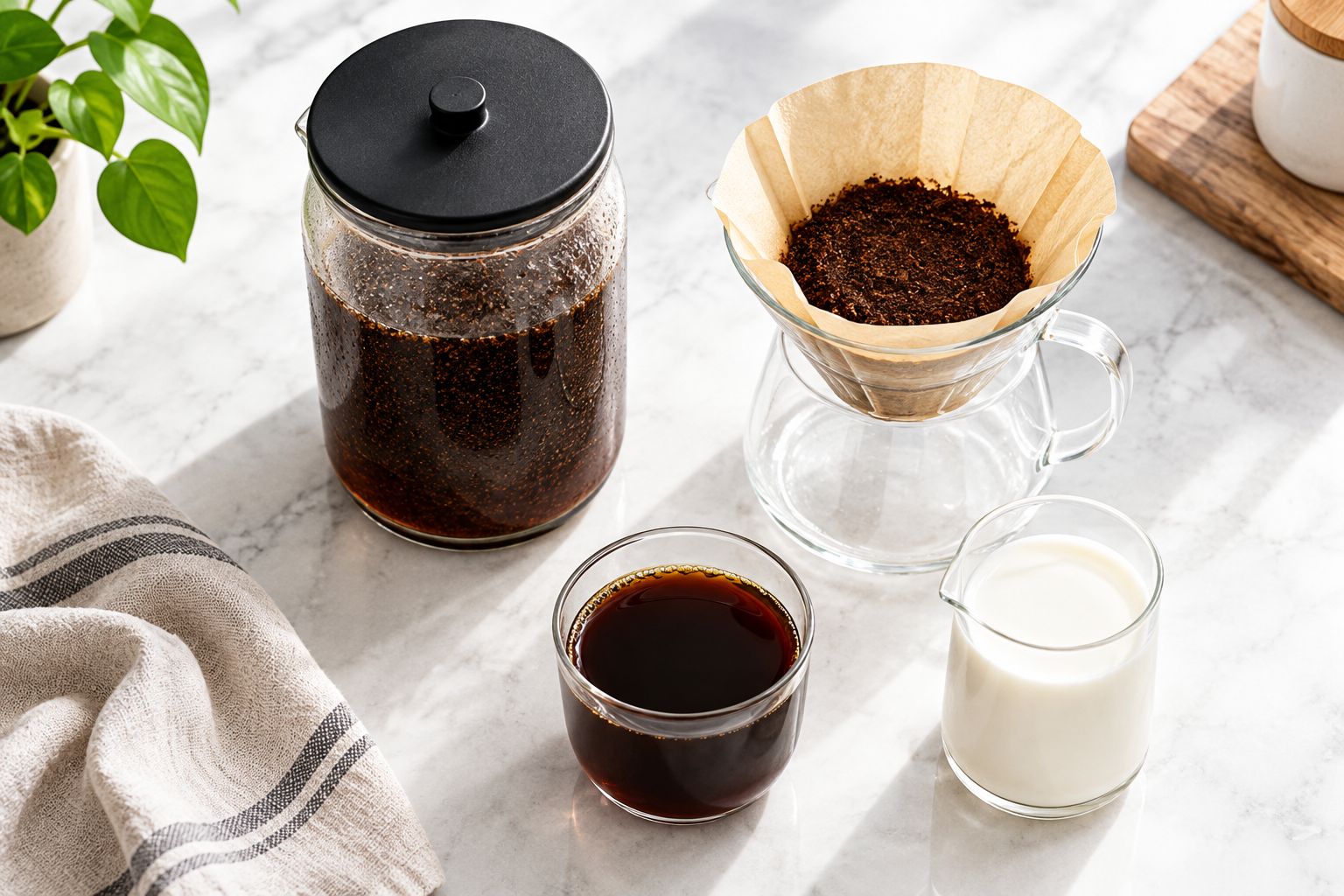
Wet all the grounds, cover the container and steep in the refrigerator. Start by checking the brew after 12 hours, then compare with a later steep of up to 18 hours if you want to explore a longer extraction.
Strain through a filter suited to your brewer. If the cup contains distracting sediment, try finer filtration before deciding that the beans are the problem. Avoid squeezing a filter bag hard enough to push fine particles into the drink.
Taste and adjust
Taste a small amount before adding ice or milk. Then prepare your normal serving and decide whether you want it stronger, lighter or simply different in flavor.
Change one variable in the next batch. Adjusting grind, steep time and dilution together makes it difficult to identify which change helped.
Fix the drink before replacing the beans
A disappointing batch does not automatically mean you chose the wrong coffee. First separate a flavor mismatch from a preparation problem.
- Too strong: Add water gradually to a small serving before changing the next batch.
- Too weak: Compare the brew before and after adding ice or milk. If it tastes right beforehand, dilution is the first issue to address.
- Too gritty: Review the grind and filtration. Grit is not a tasting note.
- Wrong flavor direction: Return to the product description. Brewing adjustments cannot make every coffee suit every preference.
For milk drinks, compare the final drink rather than the concentrate alone. A coffee that seems forceful without milk can be the right match once you prepare your usual serving; that is a personal preference, not a product defect.
How the ranking works
This 2026 ranking prioritizes useful buying information: stated flavor, stated roast and explicit cold-brew suitability. It does not present a blind tasting, a laboratory comparison or a measured performance contest.
The medium roast ranks first because its description supports a more specific recommendation. The dedicated blend remains a valid alternative for a different priority. Neither listing establishes a caffeine amount or a health benefit, and neither needs those claims to help you choose.
Which cold brew coffee beans should you choose?
Choose Bkwcoffee Cold Brew Coffee in the medium roast if you are undecided. Its chocolate, toffee and floral description gives you a clear starting point for deciding whether the coffee matches your taste.
Choose the dedicated Cold Brew Coffee blend instead if explicit brewing purpose is your deciding factor. For your 2026 coffee routine, make the selection once, keep your first recipe consistent and adjust the finished drink before ordering something different.
FAQ
What are the best cold brew coffee beans for a first-time buyer?
Bkwcoffee Cold Brew Coffee in the medium roast is the clearest flavor-led starting point in this shortlist. Its description lists smooth chocolate, toffee and floral tones and identifies cold brew as a use.
Do I need special beans to make cold brew?
No, cold brew is a brewing method rather than a separate bean type. A blend explicitly intended for cold brewing can simplify your choice, but flavor preference and a repeatable recipe still matter.
Is medium roast or dark roast better for cold brew?
Neither roast is automatically better for every drinker. Choose using the coffee's stated tasting profile, then judge it in the black coffee or milk drink you normally prepare.
How much coffee should I use for a first cold brew batch?
Start with 60 grams of coffee and 600 milliliters of water as a trial recipe. Keep those measurements consistent while you decide whether the resulting drink needs more or less dilution.
How long should I steep cold brew in the refrigerator?
Start by checking your refrigerated batch after 12 hours. For a later comparison, try a steep of up to 18 hours while keeping the coffee, grind and water measurements unchanged.
Are the two Cold Brew Coffee listings the same?
The supplied descriptions distinguish two listings with the same product name. One specifies a medium roast with chocolate, toffee and floral tones; the other explicitly describes a blend intended for cold brewing.
Does cold brew or a darker roast guarantee less caffeine?
Neither cold brewing nor a darker roast guarantees less caffeine in your serving. Coffee dose, brewing recipe and dilution affect what ends up in the cup; the supplied product descriptions do not state caffeine amounts.
One last thing
Taste before the ice, then taste after it. Melting ice adds water, so the same batch changes as you drink it. If the first sip works but the last tastes weak, adjust the serving before blaming the beans.
Keep a short note with the product version, coffee weight, water amount, steep time and how you served it. That note is more useful for your next order than trying to remember whether the batch was simply good or bad.


